Local advertising in NJ works best when your message reaches people in the few towns where your customers actually live. Picture this: a bakery in Morris County pays for an ad that runs across the whole region. Most of the people who see it live an hour away and will never stop in. This guide shows you how to choose channels, aim at the right towns and track what pays off.
Key takeaways
Start with a map of where your customers live, then pick channels that reach those towns.
Most small businesses do best with a mix of two or three channels, tested over time.
Give every ad one clear offer and one easy way to reach you.
Track each ad with its own phone number, web page or code, and ask new customers how they found you.
Why Local Advertising Works for Small Businesses
People tend to buy from businesses they see often. When your name shows up at the gym, on a phone screen and in the town paper, it starts to feel familiar. That familiarity makes it easier for a buyer to call you when the need comes up.
Local advertising in NJ also helps a small budget go further. Instead of paying to reach a whole state, you pay to reach the few zip codes where your customers live. As a result, more of every dollar lands in front of people who can actually visit.
Start With Your Map, Not Your Message
Before you buy any ad, write down what you want it to do. The U.S. Small Business Administration suggests a marketing plan that covers your target market, your edge over competitors, your goals and your budget. It also advises comparing what you spend with the revenue it brings in.
Next, describe your best customer, and above all, where they live. The SBA notes that market research should ask where your customers live and where your business can reach. Free public data can help, too. For example, the Census Bureau’s data.census.gov lets you look up population and household figures for counties and towns.
Then answer a few simple questions:
Which towns or counties do most of my current customers come from?
Where do they spend time during the week?
What do they read, watch, stream or scroll?
When are they most likely to need what I sell?
Your answers point you to the right channels. They also keep you from paying to reach people who are too far away to visit.
Local Advertising Channels Compared
There is no single best channel. Most small businesses do well with a mix, and they adjust it over time. Here is how common options compare:
Where people see it
Good for
Print
Town papers, school programs and mailers
Reaching readers in specific towns
Indoor screens
Gyms, cafes and waiting rooms
Repeat views from people already nearby
Search and maps
Results when someone searches nearby
Catching people ready to call
Social media ads
Feeds within a radius you choose
Targeting by area and interest
Streaming TV and audio
Connected TV, streaming radio and video
Sight and sound in a smaller area
Geofencing
Phones inside a set area, such as an event
Reaching people at a specific place
Each channel has a different cost and reach. Therefore, test one or two at a time instead of trying them all at once.
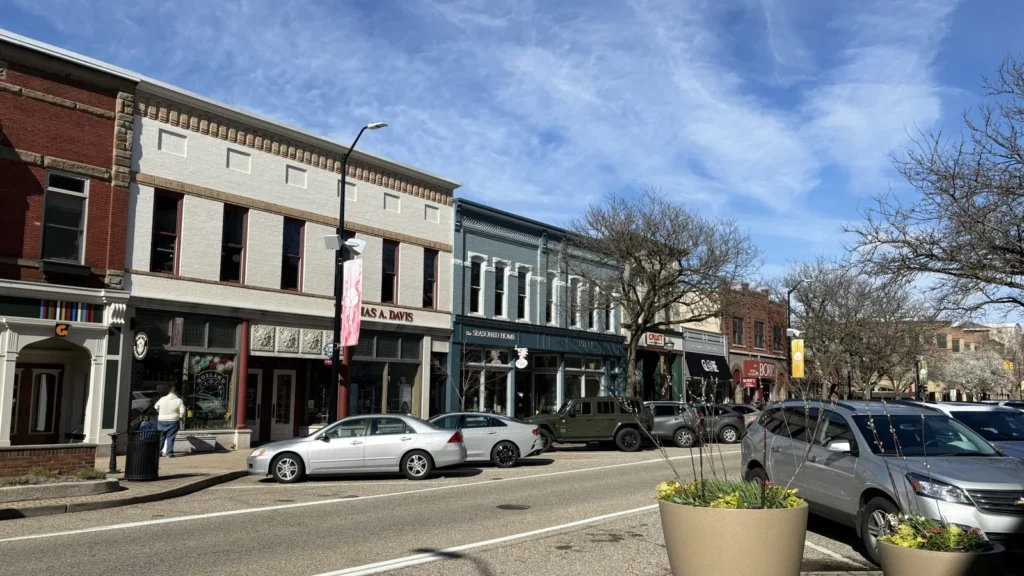
Town papers and community mailers still reach readers in the specific towns you serve.
Target by Town and County
Good local advertising in NJ matches the map of where your buyers live. If most of your clients come from Morris County, there is little point in paying to reach the shore. Likewise, a shop on a busy main street may only need to reach people within a few miles.
Many digital tools let you draw a radius or pick zip codes. Print and screen ads work by place, so choose papers and venues in the towns you serve. In addition, keep your message local. Name the town, show a familiar landmark or mention a community event. People notice when an ad speaks to their own neighborhood.
New Jersey note: The New Jersey Small Business Development Centers (NJSBDC) offer no-cost, one-on-one consulting, with help organized by county. A counselor can help you think through your market before you spend on ads.
Cafes, gyms and waiting rooms are places where nearby customers see the same ad again and again.
Write an Ad People Remember
A local ad usually gets a few seconds of attention, so keep it simple. First, lead with one clear benefit or offer. Next, show your name, logo and town in a way people can read at a glance. Finally, give one easy next step, such as a phone number, a short web address or a QR code.
Repetition matters, too. Plan to run each ad long enough that people see it more than once. Meanwhile, make sure your website and phone are ready for the response. An ad that sends people to an old site or a full voicemail box wastes the click.
Watch out: The SBA reminds businesses that federal rules cover advertising and labeling for many consumer products. Keep every claim in your ad accurate, and check the rules for your industry before you run it.
A clear offer, your name and one way to reach you is all a local ad needs to do its job.
How to Measure Local Advertising Results
Tracking keeps local advertising in NJ from turning into guesswork. The SBA admits that some tactics, such as print ads and word of mouth, are hard to measure. However, it urges you to measure the same way every time. Here is a simple routine:
Ask every new customer. Find out how they heard about you, and write it down.
Give each ad its own tracker. Use a unique phone number, web page or promo code for each one.
Watch your listing numbers. Check calls, website visits and direction requests on your business profile.
Compare cost with sales. Weigh what each channel costs against the customers it brings in.
Shift your budget. Every few months, move money toward the channels that work.
In short, keep what works and drop what does not. Small changes, made often, add up over a year.
Local Advertising in NJ: Questions Owners Ask
How much should I spend on local advertising?
There is no set number. Start with an amount you can afford to test for a few months, and include it in your marketing plan. Then put more into the channels that bring in paying customers, and cut back on the rest.
How long before I see results?
It depends on the channel. Search ads can bring calls soon after they start. Screen and print ads, on the other hand, build name recognition over time, so give each test long enough before you judge it.
Is print advertising still worth it?
For many local businesses, print still reaches readers in specific towns. The key is tracking. Add a unique phone number, web address or code to each print ad, so you can see what it brings in.
Should I advertise in towns where I have no customers yet?
You can, as a test. Start with towns next to the ones you already serve, where people may know your name. Keep the budget small at first, and track results separately, so you can see whether the new area responds.
How Mindy Clements Can Help
Mindy Clements represents BrightSide Media Inc., a local marketing company that serves businesses in Passaic, Essex and Morris counties. BrightSide runs a hyper-local network of indoor digital screens in community venues, and the screens play full-motion ads for local businesses. The company also offers website design, Google Business Profile management, social media management and pay-per-click and social media ads. In addition, it handles connected TV, geofencing, streaming audio and YouTube ads. Businesses can also apply to host a screen as a venue partner.
To plan your next round of local advertising in NJ, visit her profile to call, email or request an introduction. She is part of our Starting or Growing a Business referral team. For related needs, you can also meet Moshe Zchut for digital marketing or Betsy Zaplin for promotional products. You can browse every member in the full directory.
This article is general information, not legal or financial advice. For advice about your own business, speak with a qualified marketing or business professional.




 With Nick Ilacqua IT Support Services