A smooth pool opening in NJ starts well before the cover comes off. Picture this: the first warm weekend arrives, friends are on the way, and you pull back the cover to find green water and a pump that will not prime. A little planning prevents most of that stress. This checklist walks you through timing, cleanup, equipment, water balance and the safety checks that matter most, whether you do the work yourself or hire a pro.
Key takeaways
Open once warm weather settles in, and book early if you want professional help.
Clean and store the cover, then reconnect and inspect the equipment before you add chemicals.
Test and balance the water, and retest before anyone swims.
Walk the fence, gate and drain covers as part of every opening.
New Jersey’s construction code calls for a permanent barrier around regulated pools, not just a safety cover.
When to Schedule Your Pool Opening in NJ
There is no single right date. For most homeowners, the best time for a pool opening in NJ comes once the weather turns warm and stays that way. Still, it can pay to open a little before the hot days arrive. Warm weather helps algae grow in a covered pool with no circulation, so a late opening can mean more scrubbing and more chemicals.
Also, think about your calendar. If you plan to hire help, pool companies get busy in spring, and the best dates fill up fast. Booking early gives you time to fix a problem before your first pool party.
Tip: When you compare pool companies, ask exactly what the opening includes. For example, ask about chemicals, a filter cleaning and a return visit if the water does not clear.
Your Pool Opening Checklist, Step by Step
Every pool is a little different, so follow the instructions for your own equipment. In general, the work runs in this order:
Clear the cover. Pump off standing water, then sweep away leaves and debris so they do not fall into the pool.
Remove and store the cover. Lift it off with a helper, since a wet cover is heavy. Hose it off and let it dry fully before you fold it, or it may grow mold.
Reconnect the system. Remove winter plugs from the skimmer and return lines. Then put the regular fittings, hoses and valves back in place.
Raise the water level. Fill the pool back to its normal operating level, as your equipment instructions describe.
Start the pump. Prime it, turn it on and watch for leaks, odd noises or weak flow.
Clean the pool. Skim the surface, brush the walls, steps and floor, then vacuum the debris that settles.
Test and balance the water. Add chemicals in stages, run the filter and retest before anyone swims.
As you clean, look closely at the liner or finish. Tears, stains, rough spots and cracks are easier to repair early in the season, before heavy use.
Look at every drain cover before the first swim. A cracked or missing cover is a reason to keep everyone out of the water.
Check the Equipment Before You Turn It On
Your pump, filter and heater sat idle all winter. So give each one a close look before you start the system:
Look for cracks, leaks or loose fittings on pipes, valves and the pump housing.
Clean or service the filter so it can trap dirt well.
Check the heater, lights and timers, and call a pro for any electrical issue.
Inspect your automatic cleaner’s hoses, brushes and wheels.
Reinstall ladders, handrails and the diving board, then tighten every bolt.
If the pump hums but will not move water, or a fitting keeps dripping, stop and call for service. Running damaged equipment can turn a small repair into a costly replacement.
Balance the Water Before the First Swim
Clear water is not always safe water. That is why testing matters so much. Use a good test kit, or take a sample to a pool supply store. In general, you will check these levels:
pH, which affects swimmer comfort and how well your sanitizer works
Chlorine or your other sanitizer
Total alkalinity, which helps keep pH steady
Calcium hardness, which can affect surfaces and equipment
Many owners shock the pool after opening and then run the filter for a long stretch. Your test kit and product labels will tell you the target ranges and the right doses for your pool’s size.
Watch out: Never mix different pool chemicals together, and add them one at a time as each label directs. Store them in a cool, dry place, out of reach of children and pets.
Safety Checks for Every Pool Opening
Safety deserves its own list. The American Red Cross urges layers of protection around home pools, including barriers, close supervision and knowing how to respond in an emergency. It also reports that a four-sided isolation fence reduces a child’s drowning risk by 83 percent compared with three-sided property-line fencing.
Make these checks part of every pool opening in NJ, before anyone swims:
Fence. The American Academy of Pediatrics says a pool fence should be at least 4 feet high on all four sides, with no gaps wider than 4 inches.
Gate. It should close and latch on its own and open away from the pool. The AAP puts the latch at least 54 inches from the ground.
Drain covers. The Red Cross recommends anti-entrapment drain covers and safety release systems.
Above-ground pools. Lock or remove the steps and ladder whenever no adult is actively watching.
Rescue skills. Learn CPR, keep a phone nearby and name an adult “water watcher” whenever kids swim.
New Jersey note: A 2020 Construction Code Communicator from the state’s Division of Codes and Standards explains that pools able to hold more than 24 inches of water fall under the Uniform Construction Code. They need a permanent barrier that completely surrounds the pool. New Jersey also removed the option of using a powered safety cover as that barrier.
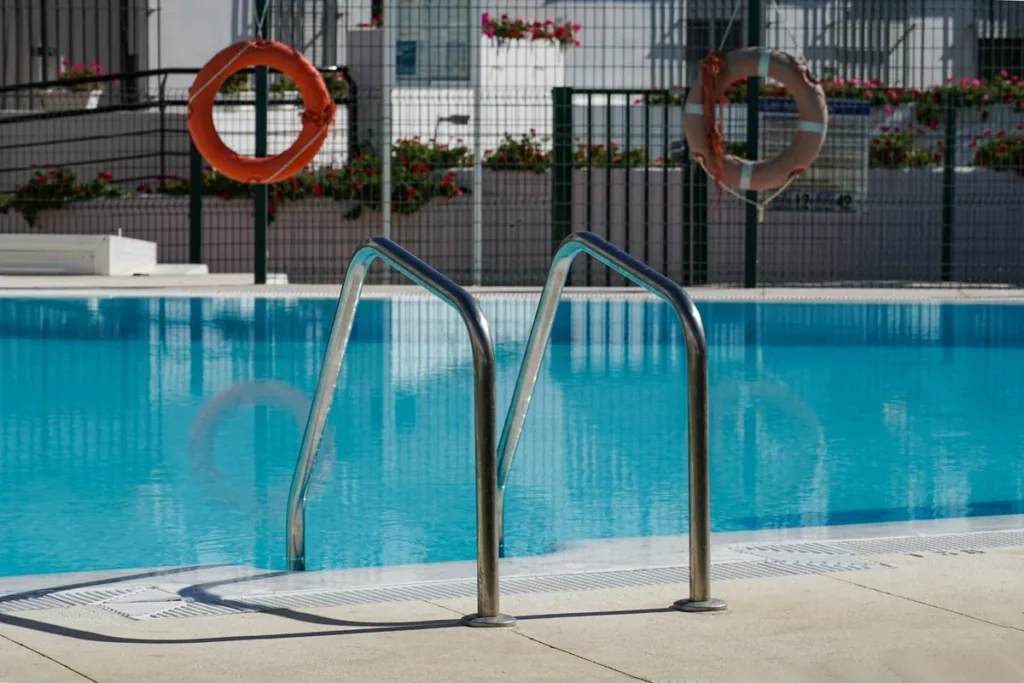
Barriers, rescue gear and an adult who watches the water work together as layers of protection.
DIY or Hire a Pro?
Many owners handle a simple opening on their own. However, a professional can help when the equipment is old, the water is very green or you see damage. This comparison can help you decide:
Do it yourself
Hire a pool pro
Best for
Newer pools with no known problems
Older equipment, damage or a very green pool
Time
Your own hours and tools
A scheduled visit, plus follow-up if needed
Equipment checks
Visual checks and basic fixes
Trained eye for leaks, wear and electrical issues
Water care
You test, dose and retest
Pro balances the water and can advise on upkeep
For repairs or renovation work, also ask whether the company holds a New Jersey home improvement contractor registration. Then get the scope and price in writing before work begins.
Retest the water before the first swim of the season, even when the pool already looks clear and inviting.
Pool Opening in NJ: Questions Homeowners Ask
When should I open my pool in New Jersey?
Plan to open once warm weather settles in, ideally a little before the hottest days. Opening early gives you time to clear the water and fix problems. It also helps you avoid the extra cleanup that can come with a late start.
Can we swim right after the cover comes off?
It is best to wait. First, clean the pool, run the filter and balance the water. Then retest and swim only when every level is back in range. If you are unsure, ask your pool professional to check the results.
Why is my pool green after opening?
Green water usually points to algae that grew while the pool sat covered. Brushing, shocking and steady filtering often clear it. However, a very green pool, or one that stays cloudy, may need a pro to find the cause.
Does a safety cover count as a pool fence in NJ?
Not on its own. A 2020 state code article explains that New Jersey removed the option of using a powered safety cover as the pool barrier. Instead, a regulated pool needs a permanent barrier that completely surrounds it. Check with your local code office about your own setup.
How Tyrone Johnson Can Help
Tyrone Johnson founded Back 2 Blue Pools & Patios, an owner-operated pool and outdoor living company in Towaco. He brings a background in mechanical systems for commercial construction. His company offers weekly pool maintenance, seasonal openings and closings, equipment repairs and installations, and pool renovations. It also builds new gunite, vinyl liner and fiberglass pools, along with paver patios, walkways and retaining walls. Tyrone serves homeowners in North Jersey towns such as Montville, Wayne, Parsippany and Caldwell, and his NJ HIC number is 13VH13608900.
To plan your next pool opening in NJ or a repair, visit his profile to call, email or request an introduction. He is part of our Home Projects & Repairs referral team. For other outdoor projects, you might also meet Tim Fisher for home improvements and custom carpentry, or Alex Castro for roofing and siding. You can also browse the full member directory.
This article is general information, not professional safety or technical advice. For advice about your own pool, speak with a qualified pool professional and your local code office.


 With Tim Fisher Home Improvements & Custom Carpentry