Ballroom dance lessons in NJ welcome adults of every age, and plenty of beginners arrive sure they have two left feet. Picture this: your wedding is six months away, and the thought of a first dance makes your palms sweat. Here is the good news. That worry is common, and it usually fades faster than you expect. This guide walks you through a first lesson, what to wear, how group and private lessons compare and how to choose a studio.
Key takeaways
You do not need a partner, a dance background or perfect rhythm to start.
Group classes are social and let you dance with many partners. Private lessons give you focused feedback.
Dancing counts as physical activity, and federal health guides list it with walking and swimming.
Wear clothes you can move in and smooth-soled shoes that let you turn.
For a wedding, start a few months early so you can practice without stress.
Why Adults Love Ballroom Dance Lessons
Many adults sign up for one reason, such as a wedding or a milestone party. Then they stay because it is fun. A weekly class gives you a reason to get out of the house, learn something new and laugh at your own mistakes.
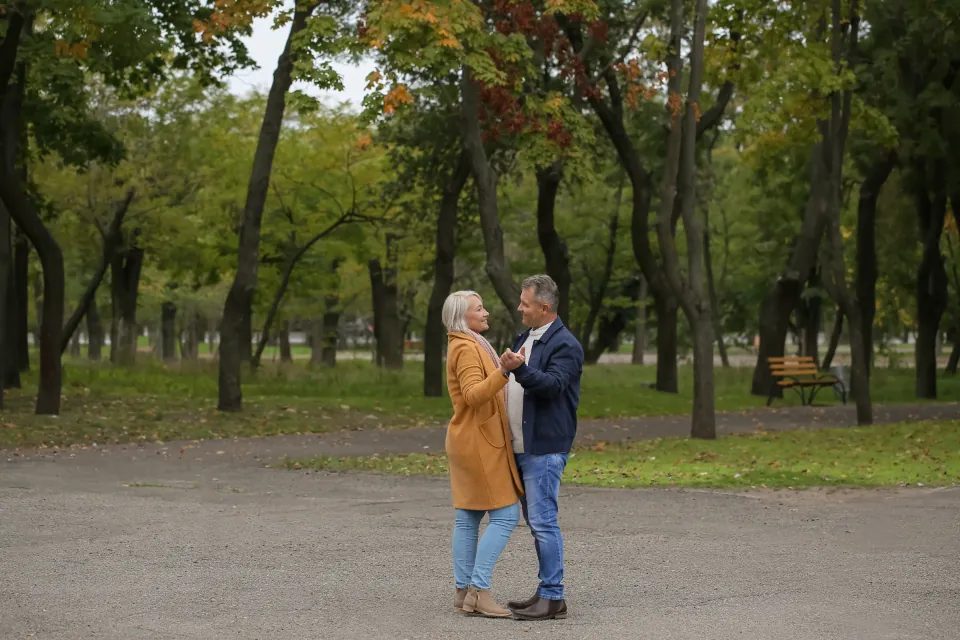
Dancing is also social in a way a treadmill is not. You meet new people in every class, and you all learn together. For couples, a standing lesson can turn into a weekly date night. For singles, it is an easy way to meet people who enjoy music.
There is a health side, too. The National Heart, Lung, and Blood Institute names dancing as one example of physical activity that works your muscles, along with walking and swimming. In fact, the federal Move Your Way campaign uses the tagline “Walk. Run. Dance. Play.” According to MedlinePlus, regular exercise can help you:
Improve your mood and manage stress.
Sleep better and feel more energetic.
Lower your risk of falls as you age, through balance and strength work.
MedlinePlus also suggests joining a group or class, such as a dance class, to make exercise more fun. It adds that even 5 minutes of activity has real health benefits. So you do not need to be in great shape before your first lesson.
Dancing counts as physical activity, so a weekly class can be one easy part of how you stay active.
What Happens at Your First Ballroom Dance Lesson
A first lesson is relaxed and built for beginners. Most teachers follow a simple flow, so you always know what comes next:
Warm welcome. Your teacher asks about your goals, such as a wedding, fitness or a fun night out.
Basic step. You learn one simple pattern and count the timing out loud.
The hold. Next, you learn how partners connect, and how one person leads while the other follows.
Music. Then you put the step to a song, slowly at first and a little faster as it clicks.
Quick review. Finally, you go over what to practice before the next class.
Expect to make mistakes, because everyone does. Your teacher would rather see you laugh and keep going than freeze and worry about it.
Watch out: Do not push through pain to keep up. Tell your teacher about any injury or physical limit before class starts. If you have a health condition, check with your doctor before you begin a new activity.
What to Wear and Bring to Class
You do not need special gear for your first few lessons. However, a little planning makes the hour more comfortable. Use this quick list:
Clothes you can move and stretch in easily
Smooth-soled shoes that slide and turn, not sneakers that grip the floor
A water bottle, since you will warm up quickly
A short note about any injuries to share with your teacher
Your favorite song, if you are preparing for a special dance
Tip: Arrive five or ten minutes early for your first class. That gives you time to meet your teacher, change your shoes and watch the floor for a moment before you join in.
Group Classes or Private Ballroom Dance Lessons?
Both formats work well, and many students mix them. For example, some people take a weekly group class for practice and add a private lesson for detailed feedback. This quick comparison can help you decide where to start:
Group class
Private lesson
Best for
Meeting people and learning the basics
Fast progress on your own goals
Partner needed?
No, partners often rotate
No, your teacher can dance with you
Pace
Set for the whole class
Set by you
Good for weddings?
Helpful for basic steps
Ideal for a routine to your song
If you come alone, a group class is a friendly place to start. Many classes rotate partners, so everyone dances with everyone. As a result, you learn faster and get used to different styles of leading and following.
Ballroom and Latin Styles to Try
Ballroom dancing is a family of styles rather than one dance. Smooth dances, such as the waltz and foxtrot, travel around the floor in long, flowing lines. Latin and rhythm dances, such as the cha-cha, rumba and salsa, stay closer to one spot and use lively hip action.
You do not have to pick a favorite right away. Instead, try a few styles and notice which music makes you want to move. Some people love the elegance of a waltz. Others light up the first time they hear a mambo.
A first dance looks relaxed when the basic hold feels natural, so give yourself a few months of lessons.
Ballroom Dance Lessons in NJ for Your Wedding
A first dance is one of the most popular reasons to start. Lessons help you feel calm when every guest is watching. A teacher can also build a short routine that fits your song, your outfit and your skill level.
Give yourself time. Starting a few months before the wedding lets you practice without a last-minute rush. Also, think about who else will dance. Parents, the wedding party or the whole family can join a lesson, so the dance floor fills up fast once the music starts.
Between lessons, practice at home for ten minutes at a time. Put on your song and walk through the steps in the kitchen. Short, regular practice beats one long session the night before.
How to Choose a Dance Studio Near You
The right studio makes beginners feel welcome from the first phone call. Ballroom dance lessons in NJ come in many formats, so it pays to compare. Before you sign up, ask a few questions:
Do you offer group classes, private lessons or both?
Which styles do you teach, and at what levels?
Do you host social dances where students can practice?
Can you help with a wedding dance or another special event?
Can I try a lesson before I commit to a package?
Social dances deserve a special mention. These relaxed evenings let students practice with real music and new partners. Consequently, they build confidence quickly. Also, pay attention to how the teachers treat new students. A patient, upbeat teacher makes all the difference.
Ballroom Dance Lessons in NJ: Questions Beginners Ask
Am I too old to start ballroom dance lessons?
Many people start dancing as adults, and you can learn at your own pace. Beginner classes are built for people with no experience. If you have a health condition or an old injury, talk with your doctor before you start a new activity.
Do I need a partner to take ballroom dance lessons?
No. Many group classes rotate partners, so you dance with everyone in the room. In a private lesson, your teacher can be your partner. Couples are welcome too, of course, and many enjoy learning side by side.
How long does it take to feel comfortable on the dance floor?
It depends on how often you practice. Still, most beginners feel more at ease once the basic step starts to feel natural. Regular classes, a little practice at home and a social dance or two all help you get there sooner.
What should I wear to a first dance lesson?
Wear comfortable clothes that let you move and stretch. Choose shoes with a smooth sole that can slide and turn, and skip sneakers with a lot of grip. Bring water, and tell your teacher about any injuries before you begin.
Dance With Pamela Licht
Pamela Licht has taught for more than two decades at Rogers Dance Center in Fairfield. The ballroom and Latin studio offers private lessons, group and kids classes, wedding dance preparation, social dances and space for events. Pamela earned a BFA in dance from Montclair State University in 2001. She has competed professionally as a World Mambo finalist, and the studio lists her as a USTA examiner. She has also taught social and Latin dance classes at Montclair State.
This article is general information, not medical or fitness advice. For advice about your health, speak with a licensed health care provider before you start a new activity.



 With Raquel Marte Home Care Agency